
'Notwithstanding the seriousness of the allegations made, every accused had a right to a speedy trial and the court had to take into account long periods of incarceration without trial as an additional consideration for grant of bail.'
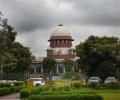
The Supreme Court of India has sought responses from the Centre and others on a petition challenging the constitutional validity of certain provisions of the Waqf Act, 1995. The petition argues that the Act gives undue favor to waqf properties and deprives non-Muslims of their property rights. The court has tagged the petition with pending petitions that raise similar issues.

Karnataka Deputy Chief Minister D K Shivakumar met senior Congress leader Priyanka Gandhi Vadra, fueling speculation about a leadership change in the state. The meeting occurs amid reports of Shivakumar pressing for the chief minister's post.

'Vigilance' is a dreaded term for PSB employees and there are instances where this fear is misused by the higher authorities to tame their subordinate officials. This fear always deters PSB executives from making decisions -- the fewer the decisions, the less the chance of falling into trouble, points out Tamal Bandyopadhyay.
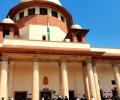
'If we stay silent now, we betray the very foundation of justice in this country.'

The bureau had on June 25 registered an FIR and arrested Majithia in the case allegedly involving laundering of Rs 540 crore of "drug money".
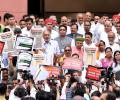
While India today is vastly different from the India of 1975, the need for vigilance against authoritarianism remains the same, asserts Utkarsh Mishra.
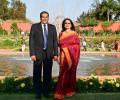
Some of his directives had the Supreme Court judges disclose their assets whereas the row over the discovery of cash from a sitting judge's official residence paved way for inquiry.
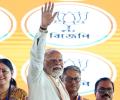
Prime Minister Narendra Modi launched a scathing attack on the TMC, accusing them of prioritizing vote-bank politics over national security and Bengali identity by promoting infiltration. He also highlighted the BJP's vision for a developed and prosperous Bengal, promising a clean break from the past.
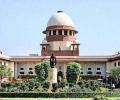
A bench of Justices Abhay S Oka and Ujjal Bhuyan said when an accused appears before a court in pursuance of a summons, the agency will have to apply to the court concerned to get his custody.
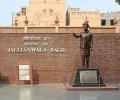
Former Supreme Court judge Justice Rohinton Nariman has warned that events similar to the Jallianwala Bagh massacre could occur if the 'basic structure' doctrine of the Constitution is diluted. In his new book, 'The Basic Structure Doctrine: Protector of Constitutional Integrity,' Nariman argues that the 1973 Kesavananda Bharati judgment, which established the doctrine, is essential for protecting fundamental rights and preventing constitutional amendments that could lead to such tragedies. Nariman's concerns are echoed by Supreme Court judge Justice K V Viswanathan, who applauds the book for its "chilling clarity" and underscores the importance of the Kesavananda Bharati ruling. The book provides a detailed analysis of the doctrine and its implications, highlighting the robustness of the Kesavananda Bharati judgment and the lack of a compelling alternative theory.

Former Union Law Minister Ashwani Kumar has argued for replacing the existing collegium system for judicial appointments, asserting that public sentiment leans toward an alternative mechanism, potentially resembling the National Judicial Appointments Commission (NJAC). He believes that the government has the authority to propose a revised constitutional amendment for judicial appointments that would withstand judicial scrutiny. Kumar also urged the Supreme Court to establish a robust internal process to address concerns within the judiciary, including allegations against judges.
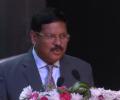
"The moment we let technology take the driver's seat in the legal system, we begin to erode the public's faith in us and with it, the foundations of the rule of law," CJI Gavai added.

Amid this unrest came the verdict of the Allahabad high court on June 12, 1975 that found Gandhi guilty over discrepancies in the electoral campaign, which led to the Emergency on the night of June 25.
The Supreme Court on Monday came to the rescue of a Dalit youth, who had lost his seat in IIT Dhanbad after missing the deadline to deposit a fee, by asking the institute to admit him to the BTech course.
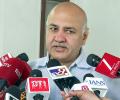
Former Delhi deputy chief minister Manish Sisodia was on Friday questioned for over three hours by the Anti-Corruption Branch (ACB) in an alleged graft case related to the construction of classrooms in government schools here, officials said.
In a major setback to Delhi's Aam Aadmi Party government, the Supreme Court on Monday ruled that the law 'expressly enables' the lieutenant governor to nominate aldermen to the Municipal Corporation of Delhi (MCD) and he is not bound by the advice of the council of ministers in the matter.

The Pakistan government, as well as the country's military establishment, have come under severe criticism from netizens on social media for recommending United States President Donald Trump for the Nobel Peace Prize.

Bhimrao Ramji Ambedkar, the architect of the Indian Constitution, is also credited with the creation of the Election Commission of India. An amendment he brought to the Constituent Assembly led to the establishment of the Election Commission as an independent body responsible for conducting elections. Ambedkar's amendment consolidated election authority into a centralized body, headed by a chief election commissioner appointed by the President, rather than separate commissions for the Centre and states. This article delves into the historical context and the importance of Ambedkar's contribution in establishing the Election Commission of India.

Amidst ongoing tensions with the ruling DMK government, Tamil Nadu Governor R N Ravi has invited Vice President Jagdeep Dhankar to inaugurate a meeting of state university Vice Chancellors in the Nilgiris district, sparking criticism from political parties, particularly the Left, who have urged a boycott. The meeting comes in the wake of the Supreme Court ruling in favor of the Tamil Nadu government regarding the appointment of Vice Chancellors, which has stripped the Governor of his previous authority as Chancellor. The Governor, however, maintains his right to convene the meeting, highlighting the ongoing power struggle between the Governor and the state government. The meeting is scheduled for April 25 and 26.

The Enforcement Directorate on Friday withdrew its summons to a senior lawyer for reportedly giving legal advice in a case after the Supreme Court Advocates on Record Association (SCAORA) wrote to the chief justice of India for taking note of the action.

'...in the minds of the youth of Assam.' 'Now, no protests happen in Assam because of fear of police encounters.'
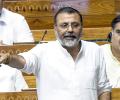
Fourth-term Bharatiya Janata Party MP Nishikant Dubey, one of the more vocal party members in the Lok Sabha, launched a broadside against the Supreme Court on Saturday, saying Parliament and state assemblies should be closed down if the apex court has to make the laws.
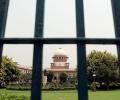
India's Founding Fathers did not give absolute powers of enforcement to the court. It is most surprising that the Supreme Court has accepted this situation, cleverly designed by the political class to weaken the top court, for all these years without demur, says B S Raghavan.
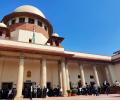
"It is shocking that the Supreme Court is adjudicating bail pleas in cases that should be disposed of at the trial court level. The system is being burdened unnecessarily," Justice Oka said while hearing a bail plea.

Chief Justice of India B R Gavai on Sunday expressed his displeasure over the absence of Maharashtra's Chief Secretary, Director General of Police or the city police commissioner to receive him during his first visit to the state after being elevated to the top post.

The reality is that far from being friendless, India is better positioned in the world than at any point post-Cold War, asserts Shekhar Gupta.

The Supreme Court of India has dismissed a petition filed by an NGO challenging the construction of a renewable energy project at the Jayakwadi Dam in Maharashtra. The court criticized the NGO for opposing the project, stating that it would be detrimental to the country's progress if every project was resisted. The court also raised questions about the NGO's bona fides and funding, suggesting that it may have been influenced by a company that lost the tender for the project. The project, a floating solar power plant, was approved by the National Green Tribunal (NGT) and the Ministry of Environment, Forests and Climate Change. The NGT had previously dismissed the NGO's plea, stating that it could not find any law prohibiting such activities in the eco-sensitive zone. The Supreme Court upheld the NGT's decision, finding no grounds to interfere.

Trump has a major decision to take in coming days -- specifically, how to rescue Israel from the attritional war that lies ahead, points out Ambassador M K Bhadrakumar.
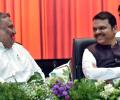
When asked about Prahar Janshakti Party leader Bachhu Kadu's hunger strike, Fadnavis said district guardian minister Chandrashekar Bawankule will speak to him.

The Centre on Wednesday told the Supreme Court that nobody can claim right over government land and it is legally empowered to reclaim properties which are declared waqf by using the waqf by user principle.
The Supreme Court of India has ruled that governors cannot indefinitely delay giving assent to bills passed by state legislatures, setting a timeline of one to three months for their actions. The court said the governor must act "as soon as possible" and that failure to comply with the timeline will make their inaction subject to judicial review. The ruling comes as several opposition-ruled states have accused governors of delaying assent to bills passed by their assemblies.

The world number two was supreme in the opening two sets but then inexplicably took his foot off the gas before bouncing back from 3-1 down in the fourth set to subdue his 33-year-old opponent for a 6-1, 6-3, 4-6, 6-4 victory.

The following are five contenders for the men's title at Wimbledon, which begins on Monday.

At the end of the day, for many worldwide, the ongoing mutual attacks between Israel and Iran would seem a contest devoid of any moral high ground and only a bout between two ordinary adversaries, one that nevertheless risks spinning out of control into a larger conflagration, notes Shyam G Menon.
'40 percent of voters in Bihar will be excluded.'
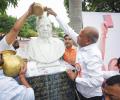
'There were deep discussions within the Sangh Parivar before this decision was made.' 'They were convinced, and only then did the Modi government proceed with the caste census.'
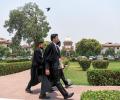
The Supreme Court of India has reserved its interim orders on three key issues related to the Waqf (Amendment) Act, 2025, including the power to denotify waqf properties, the composition of waqf boards, and the provision regarding government land. The court heard arguments from both the petitioners, who challenged the validity of the amended law, and the Centre, which defended the Act as a secular concept. The petitioners sought interim orders to prevent the implementation of certain provisions while the court considers the legal challenges.
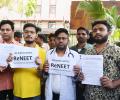
Tamil Nadu Chief Minister M K Stalin has announced that the state's Assembly resolution seeking NEET exemption, which was sent for Presidential assent, has been declined by the Centre. Stalin termed the rejection as a "dark chapter in federalism" and accused the Centre of disregarding the will of the Tamil Nadu people. He also announced an all-political party meeting on April 9 to discuss the issue further.
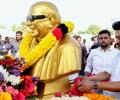
This article traces the history of the DMK's fight for state autonomy, beginning with C.N. Annadurai's advocacy in the 1960s and culminating in M. Karunanidhi's resolution in the Tamil Nadu Assembly in 1974. The article highlights the key figures involved, the arguments presented, and the impact of the Rajamannar Committee Report.
